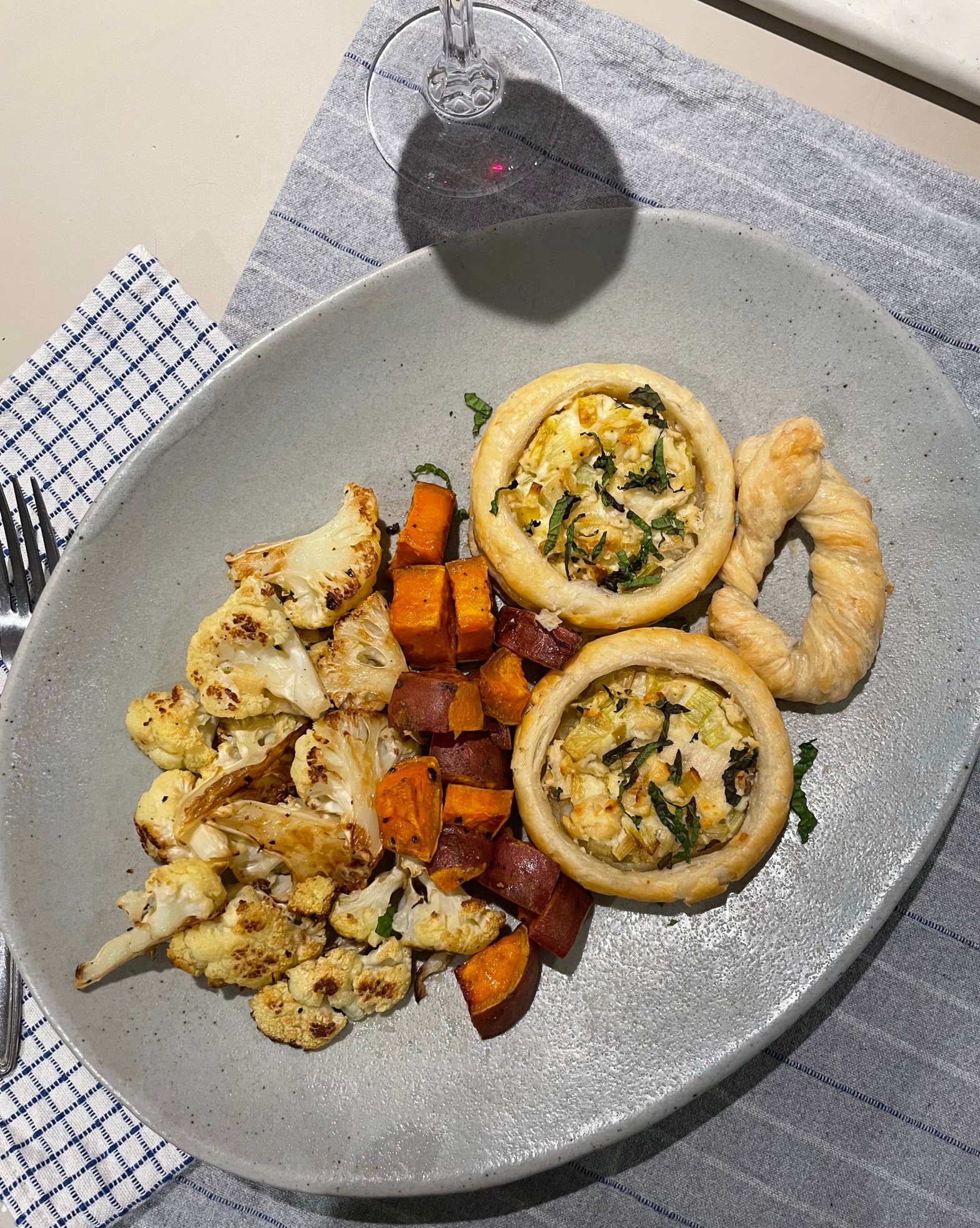
The ratio of effort to deliciousness for these individual savoury pastries is completely unmatched. If you keep a few rolls of store bought puff pastry in the freezer, you can throw these together whenever you should be so lucky to come across fresh, firm, blemish-free leeks.
The hardest part of this recipe is remembering to take the pastry out of the freezer a couple of hours in advance to thaw! I’ve started putting it in the fridge overnight, so I don’t forget.
Note: The recipe below makes approximately six galettes. A perfect weeknight main course for two, but there will be some filling leftover. I like to keep it in the fridge as filling for omelettes, but you can just as easily thaw a second roll of puff pastry to make some more galettes.
To extend enjoyment of your leeks, toss the greens in your freezer to throw into homemade stock down the line.
Ingredients
1 roll frozen puff pastry (thawed)
1 large leek (chop off the coarse green leaves; halve the stock lengthwise; rinse and slice in 1cm wide strips)
150 g plain chèvre / goat cheese
1/4 cup butter
1 tsp salt, divided
Freshly ground pepper to taste
1 egg
2 tbsp water
2 tsp oil
Process
Preheat oven to 375 F.
Unroll puff pastry dough. Using a biscuit cutter, separate the dough into rounds. Find something with a smaller circular head—I used the wide end of a steel jigger—to press smaller circles into half the rounds. With the centres removed, these will be the tops of the galettes and the full rounds will be the bottoms.
In a large pan, melt the butter over medium-high heat. Add the leek and 1/2 tsp salt. Sauté until the leek is tender and some pieces are translucent. This should take 6-8 minutes.
Place the goat cheese in a large bowl. When leek is sautéed, place it straight into the bowl while still warm. Mix to combine as the goat cheese softens. Add in remaining salt, pepper and olive oil. Stir again to combine.
Set mixture aside to make a basic egg wash: place 1 egg and 1 tbsp cold water in a bowl and whisk until incorporated. Set aside.
On a baking sheet lined with a baking mat or parchment paper, evenly place the solid rounds of dough. Place approx. 1 tbsp of leek and cheese mixture in the centre of each round. Using the back of a spoon, gently smooth down the edges of the filling, so it is slightly higher in the centres like a hill.
Place the donut shaped dough pieces on top, centred over the filling. Brush the egg mixture gently over the pastry. It’s alright if you slightly make contact with the filling.
Place the galettes in the oven for 20 minutes or until the pastry is golden and the filling is just beginning to brown in spots.
It’s reported that millions of people are participating in Dry January—a total abstention of alcohol for the first month of the year. I am not one of them. I have been happily enjoying a glass of wine occassionally during these grey, frigid days (what else to do with the rest of the Sauvignon Blanc after making risotto?).
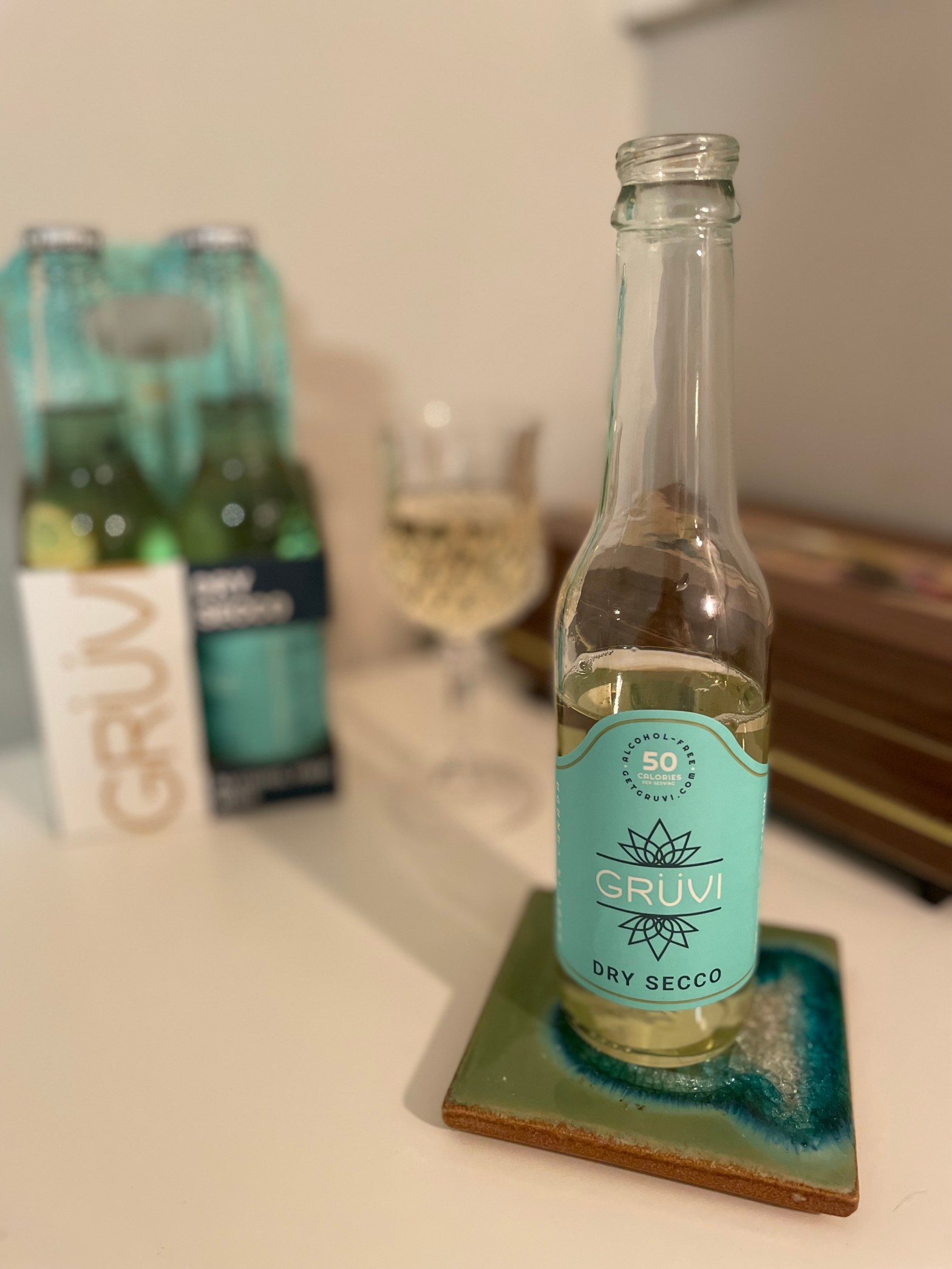
And yet, I’ll just as often reach for something with all the complexity, but none of the booze. Why? Simply because I’d like an indulgent beverage without any concern for how it will affect my energy the next day, or a fancier-than-average Tuesday dinner demands something greater than water. Additionally, the new zero-proof options steadily appearing on market shelves are delicious! The options below, all made in Canada, are smooth sippers that I crave regularly.
This list includes a casual bubbly, an upscale wine alternative, and a versatile cocktail base that’s just as good on the rocks or with a dash of tonic. Reach for any of these during a Friday night dinner party, weekend brunch, or simply to power through the last of your emails on a Monday afternoon.
At 11g of sugar per bottle, it’s sweeter than my usual wine selections, but with a subtle flavour that evokes honey and rose, it’s a delightful and indulgent post-work treat.
It’s perfectly carbonated, so the bubbles don’t interfere with its smooth flavour. This is a budget friendly option too that’s in-line with your favourite kombucha! Try it with a few dashes of pear bitters for an extra bit of brightness.
GTA-based Acid League has been taking the culinary world by storm with their innovative approach to fermentation and layering flavours. Their proxies showcase this exceptional balance of adventure and skill by bringing teas, spices and other ingredients into perfect harmony that makes for an incredibly fun drinking experience! I recently tried two of their red blends.
Nightshade: I couldn’t help but jump into the bottle at room temperature as soon as I brought it home. The flavour was lush and lingered nicely. It was the sweetness of the rooibos that was dominant on my palette, but with a pleasing complexity from the sundried tomato and other savoury additions. When slightly chilled, as recommended, the savoury and spicy notes were more pronounced.
Velvet: As the name implies, this is one smooth sipper. Rich red fruits punch through, grounded by the coffee and peppery notes. This will definitely be my go-to Proxy from here on in.
Unabashedly my favourite on this list. It’s crisp, refreshing and incredibly versatile. I’ve enjoyed it on the rocks, with a touch of tonic and lime, and in a Passeggiata cocktail with Seedlip Grove. I’m excited to restock and try it in even more concoctions—Chef Luke Hayes, who created the elixer based on a secret family recipe, provides excellent ideas and inspiration.
It’s the lemongrass and sarsaparilla that hook me in, then soft vanilla amidst a pleasantly bitter backdrop keeps me coming back. What’s more… many of the 89 ingredients contain immunity-boosting and adaptogenic properties. There’s never been a better reason to imbibe!
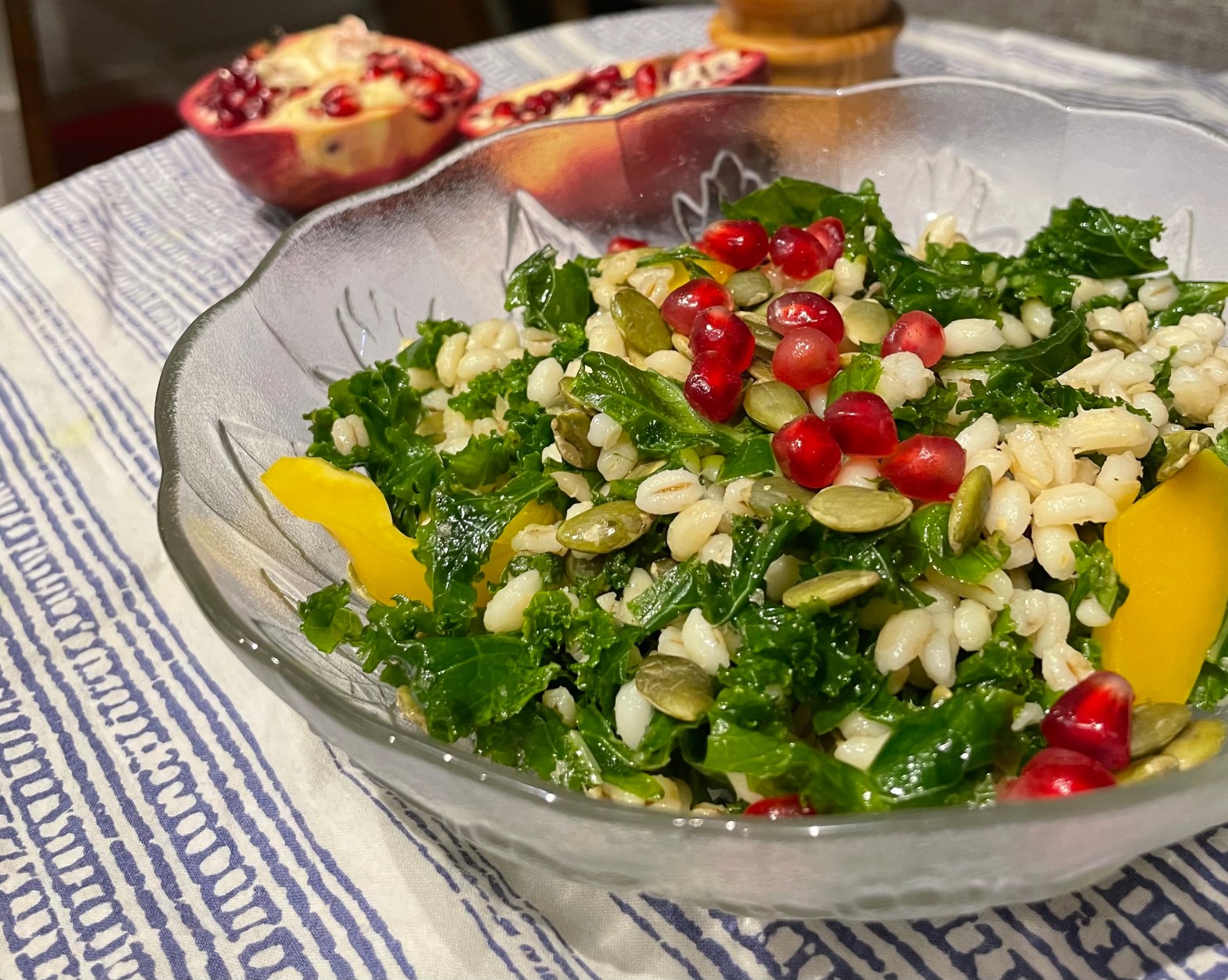
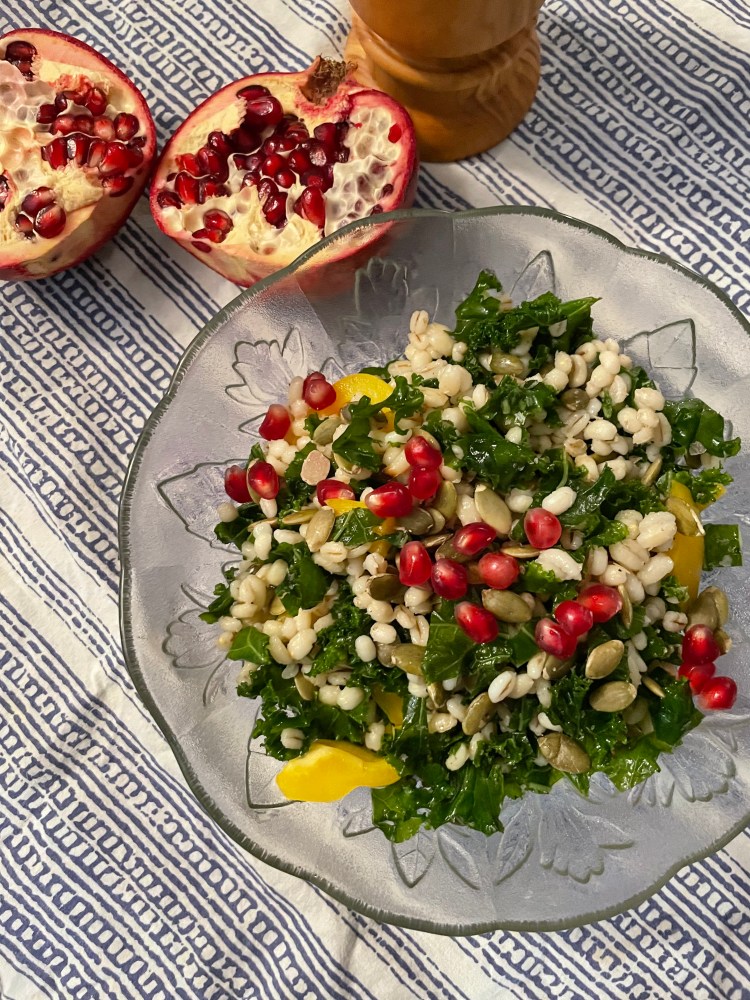
I love pomegranates. Pomegranate arils on top of yogurt. Pomegranate juice infused into a cocktail. You name it. I even find the process of scoring, soaking and separating the fruit oddly meditative.
So, it’s no surprise that this salad became my go-to lunch for the past week. I made a big batch of it last Sunday and felt like a lunch prep queen for most of week that followed. All you need is a hard boiled egg to make this hearty, whole grain salad feel like a full meal. The combination of tender kale, chewy barley and fruity vinaigrette makes every mouthful as satisfying as the one before.
Ingredients
1/2 cup pearled barley
Approx. 4 cups finely chopped kale (about 1/2 a bunch)
1/2 of a yellow bell better, diced
1/4 cup pepitas (hulled pumpkin seeds)
1/4 cup pomegranate arils
3 tbsp olive oil
1 tsp white wine vinegar
1 tsp pomegranate molasses*
1/8 teaspoon salt, plus more for cooking water
Freshly cracked black pepper to taste
*Note: pomegranate molasses is becoming easier to find in many large grocery stores; look for markets with plenty of imported and middle eastern ingredients. This salad would be tasty with a base of balsamic vinegar as well, but be sure to add a drizzle of agave or honey to round out the acidity in this case.
Process
Begin by making the vinaigrette. In a medium bowl, mix together the olive oil, wine vinegar, pomegranate molasses, salt and pepper. Stir vigorously with a fork until well combined.
Pour dressing over the kale and toss to combine. Allow the kale to sit and soften with the vinaigrette while prepping the remaining components.
Cook your barley. I used my Instant Pot with a ratio of 1.25 cups of water to half a cup of barley. Season generously with salt and cook on high pressure for 18 minutes. Quickly release the pressure at the end of the cook time. To cook barley on the stovetop, just bring 1.5 cups of seasoned water to a boil, pour in the barley and allow to simmer for 25-30 minutes (beginning checking for texture at the 25 minute mark). Drain any excess water if needed.
Allow barley to cool for a few minutes and combine the desired amount of barley with the kale; play with the ratios based on whether you prefer a greener salad or one that’s heavier on the grains. (I reserved about a quarter of a cup to enjoy separately). Add in the bell pepper and toss to combine.
Finish by tossing the pomegranate arils and pumpkin seeds over top. Mix the salad ever so slightly to avoid all of the seeds falling to the bottom. Serve while the barley is still slightly warm or refrigerate and enjoy up to four days later.
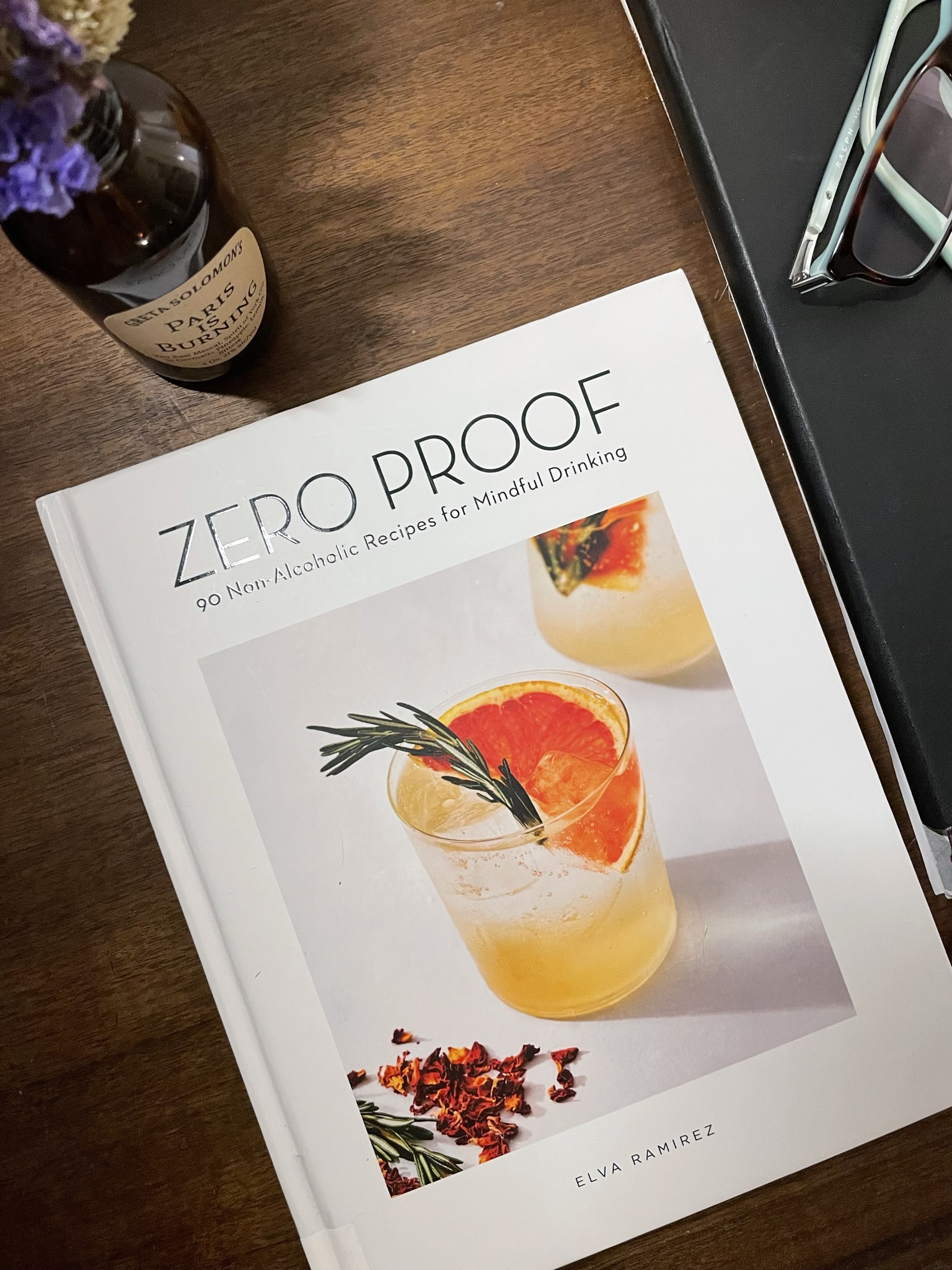
Food writer Elva Ramirez has brought her journalistic skill (she spent a decade at the Wall Street Journal before going freelance) to the task of documenting the maturation of the zero-proof cocktail movement around the world. Far from a simple pastiche of recipes from lauded bars and restaurants, Ramirez devotes more than 50 pages to chronicling America’s relationship to booze, setting the stage for a nuanced origin story of today’s alcohol free fare.
It’s a riveting history lesson beginning with the earliest days of European colonization. In 1634, after local water sources in Jamestown, Virginia, proved responsible for the deaths of two-thirds of the settlers, the British Crown required that all New England colonies have a tavern. “Before there were courthouses and city halls, the tavern was the center of colonial life,” writes Ramirez. So ingrained was alcohol (and its abuses) into daily life that a movement toward temperance sprung up by the early 1700s.
The yo-yo of alcohol restricting legislation and workarounds by thirsty Americans made for the most entertaining part of this history. In 1896, legislation drafted by Sen. John Raines (eventually becoming known as the Raines Law) took effect, banning operation of bars on Sunday, increasing venue license fees, banning all-night licenses and restricting the proximity of saloons to schools and churches. Soon enough, creative establishments sought to exploit the fact that hotels—defined as establishments with 10 rooms or more—could serve liquor on Sundays withfood. An allowance that lead to the concept of a “Raines Sandwhich,” a well-worn sandwich about as edible as a placemat that would make its way from table to table throughout the night.
This made me giggle. In early lockdown-era Toronto, bars and restaurants were able to sell take-out alcohol, but only alongside a food item. Many found creatives ways to satisfy this requirement, perhaps none more so than a Kensington Market spot that asked its customers “Do you want a bag of chips or something, or do you want the potato?”—the potato being a literal raw potato that would be handed to you and promptly left on the table.
It’s evident that Ramirez avoids the term “mocktail” shy of a very specific chapter in this story. The term “temperance cocktail” fell our of vogue post-prohibition, eventually yielding to “mocktail” first appearing in the press in 1941 and continuing on through mid-century socialite gatherings to the extravagant concoctions and competitions of the 1980s.
Fast forward a few decades and Ramirez ties the “rise of the new moderation” to the growth of Dry January throughout the early 2000s. Participation in alcohol free pledges only continues to grow, and a new era of business opportunity within the mindful drinking movement is the backdrop against the recipes in Zero Proof.
Ramirez is very clear that this history, and the development of modern zero proof cocktails, offering sophistication of flavour to rival their alcoholic counterparts, is ongoing. I remember the initial reports of Seedlip, the upscale and herbaceous non-alcoholic spirit, arriving in Canada back in 2017. For the first time, I saw it on the shelf of a big box grocery store last week.
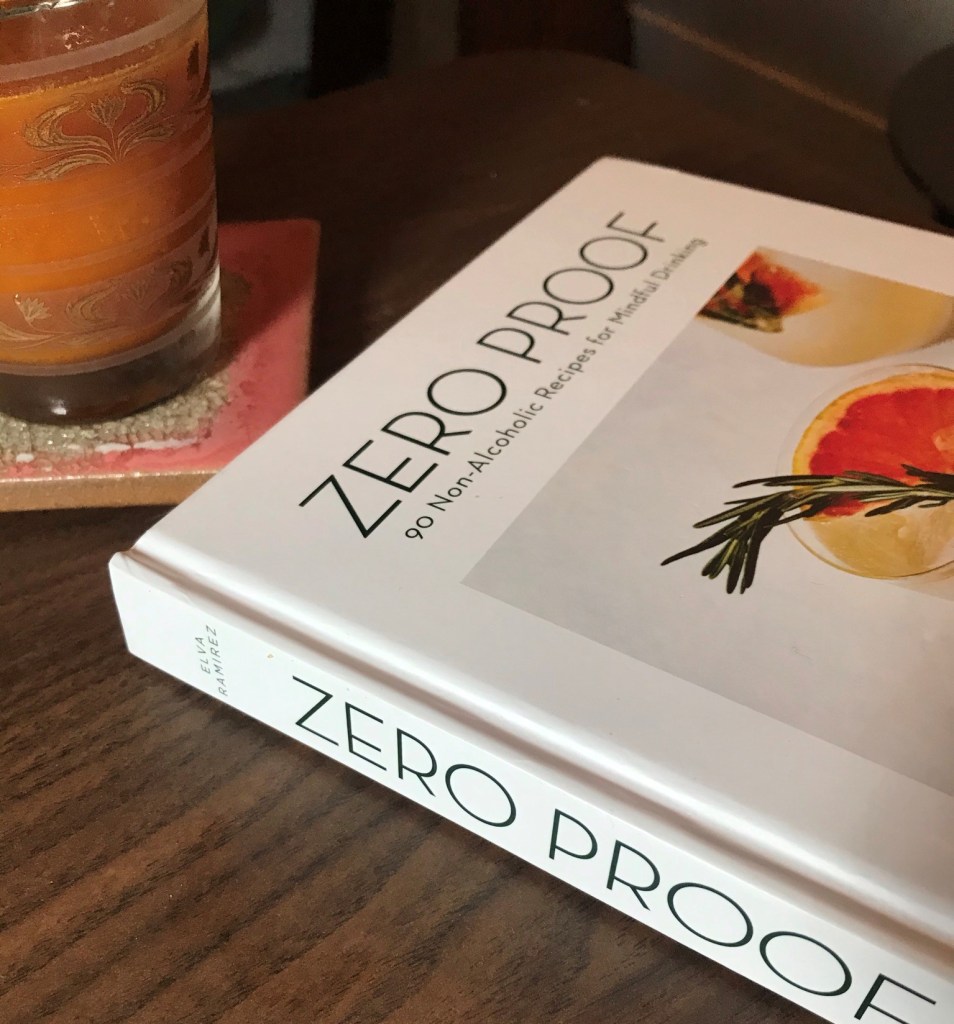
As a work of food journalism, Zero Proof is a triumph. Putting the spotlight on innovative non-alcoholic cocktails from international bartenders, taking readers from Momofuku Noodle Bar in New York to Little Red Door in Paris and beyond, perfectly illustrates what’s exciting about this era of zero proof drinking. However, it’s this same approach that left me unsatisfied when trying to use it as a cookbook.
The relative nascency of the zero proof movement left me unprepared for the complexity of the recipes, many requiring a juicer and the assembly of syrups beforehand. Ramirez makes a valiant attempt to provide a preliminary guide to best practices when creating intriguing non alcoholic drinks for any occasion, and provides thoughtful guidance on using leftover syrups, juices and teas. However, I ultimately felt out of my depth as a reader with a growing appreciation for non alcoholic drinks, but lacking in the knowledge, fridge stock or equipment of a committed mixologist.
That said, I tried my hand at three drinks that felt within my capacity (even though I cheated by swapping in some store bought elements).
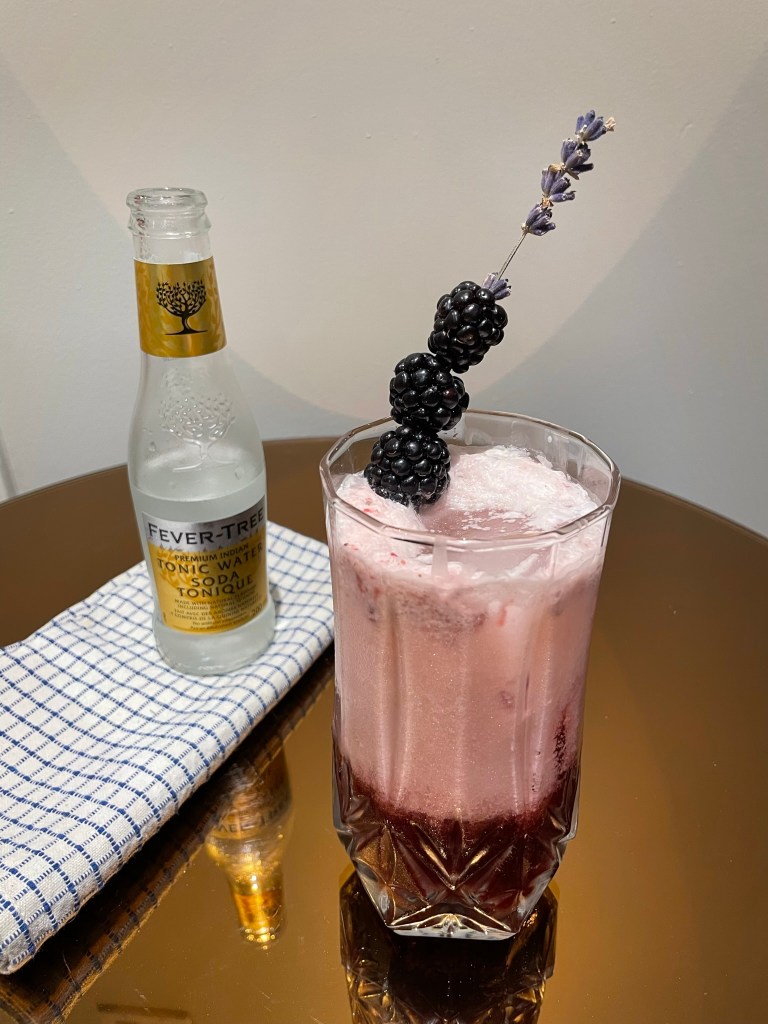
Blackberry-Lavender French Soda
I was immediately hit by the familiar, always delicious pairing of lavender and blackberry, and then subtly surprised by the texture of cream amidst the effervescence. Slightly floral, rich and refreshing.
Passeggiata
Ramirez notes that ‘passeggiata’ refers to the “Italian art of the leisurely evening stroll.” Appropriate for a drink that’s eminently complex, oh-so-slightly bitter yet incredibly smooth and delightfully drinkable.
I was interested in this cocktail primarily as a carrier for my recently purchased Kickass89 by Toronto’s own Chef Luke Hayes based on a family recipe that goes back generations. Don’t even get me started on this non-alcoholic amaro’s velvety texture and refreshing flavour with clear hints of sarsaparilla and lemongrass. It’s Hayes’ culinary genius literally bottled and I highly recommend it. But back to the Passeggiata cocktail – I recommend it too.
Medina Night
I wanted to love this blend of carrot, lemon and orange juices, and ginger and honey syrups, but after spending a fair amount of time prepping the syrups—delicious in their own right—I found the carrot too overpowering. I take a good deal of the responsibility for this as I tried using store-bought carrot juice that was quite concentrated. Ramirez is clear in the need for fresh-pressed juice for recipes throughout the book, but my lack of kitchen storage space for yet another appliance will keep full appreciation of these juice-forward recipes perpetually out of grasp.
Bottom line: if you’re excited about new options for sophisticated and adventurous drinks that don’t revolve around alcohol and want to learn more about the zero proof movement, there’s plenty in this book to love. You’ll just want to prepare for a significant degree of planning, ingredient sourcing and prep time before you start shaking your way through the bulk of its recipes.
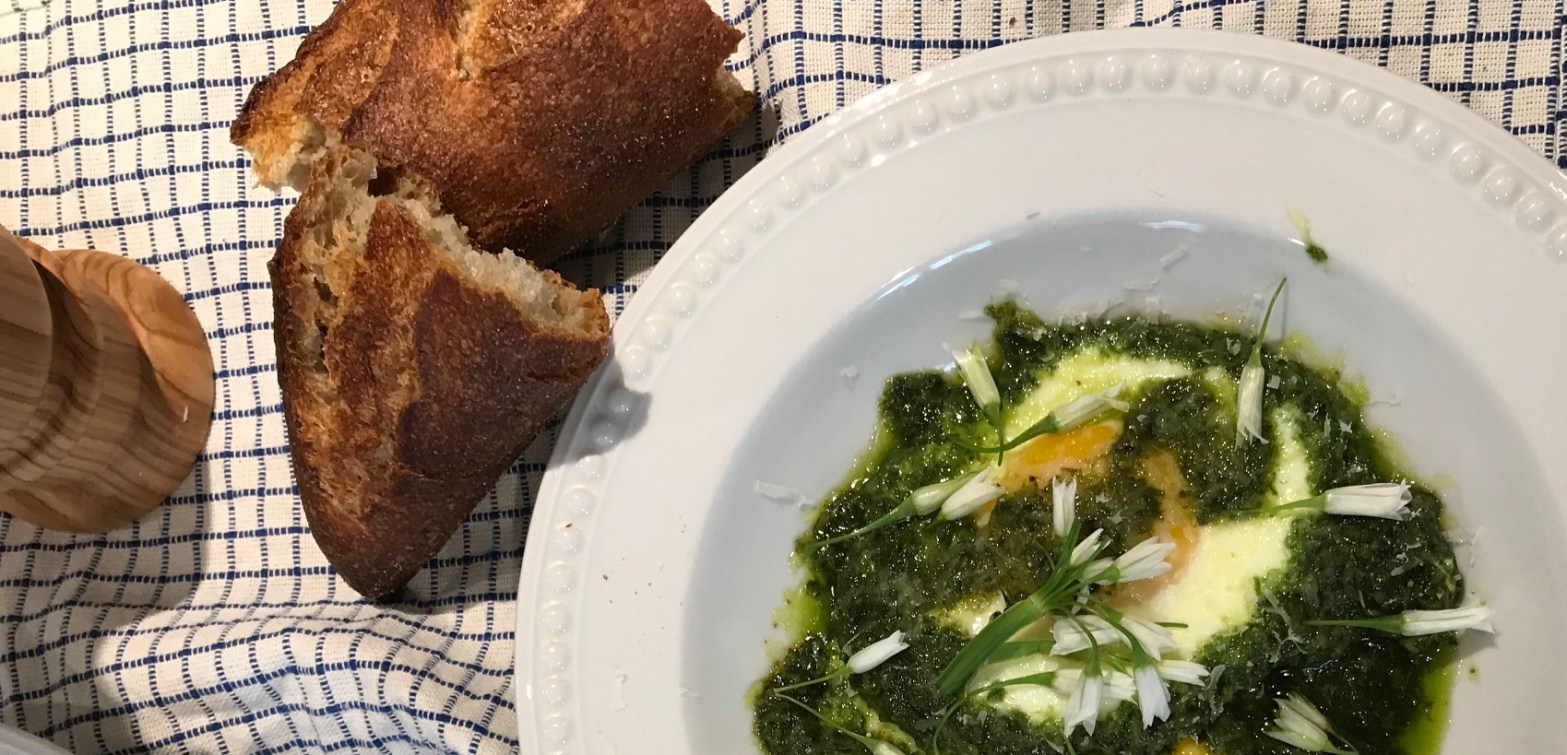
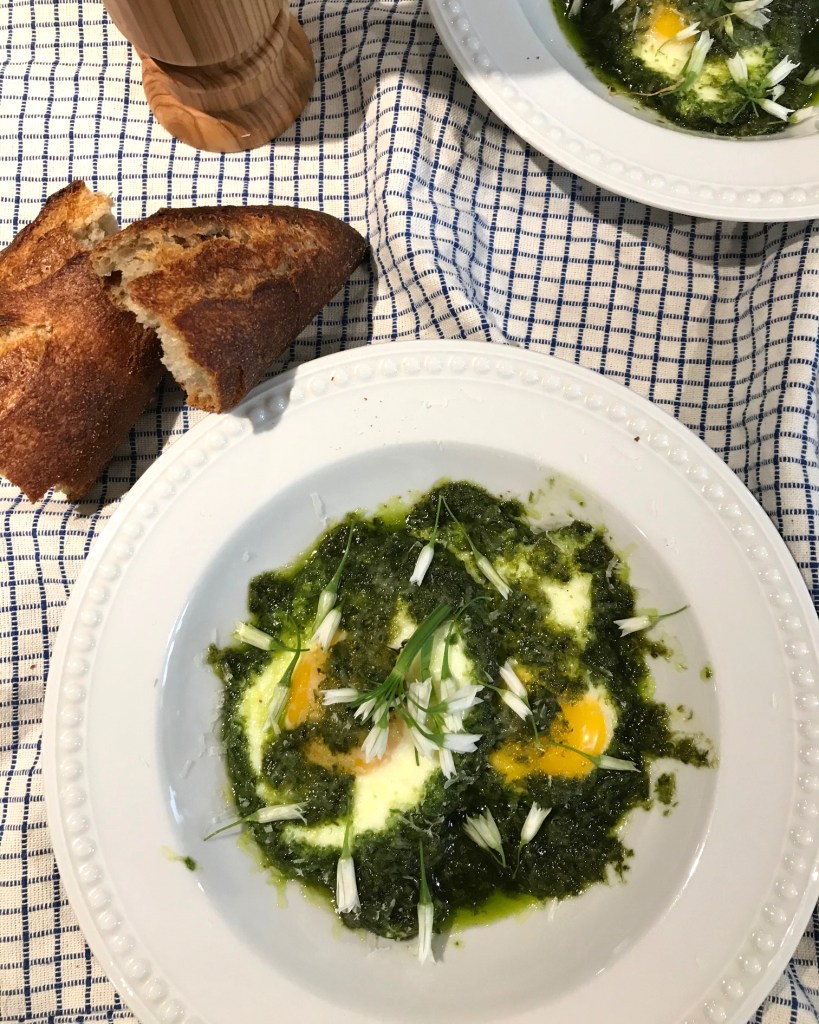
This is springtime encapsulated in a (mostly) one-pan brunch recipe!
The appearance of briefly available spring produce sneaks up on me every year, so when I walked into the market/bottle shop housed inside Leslieville’s Ascari Enoteca in search of soppressata, I initially thought that the bright green in the bottom corner of the fridge was basil. Pleasantly surprised by my mistake, I walked out with a gorgeous bundle of fresh ramps and—at the suggestion of the staff—a package of onion flowers.
Onion flowers have a bright and crisp flavour, much like onions themselves, yet slightly less sweet. Think of a green onion, but lighter in flavour and in the most delicate, delightful form.
While they’re an excellent compliment to the ramps, feel free to swap in some fresh herbs in lieu of the onion flowers. Some basil, parsely or even dill would work well too.
Ingredients
1 bunch of fresh ramps (about 8-10 stalks)
4-5 eggs
1/2 cup olive oil
1 tbsp butter
2 tbsp water
1 tsp salt, plus more to taste
1/4 cup finely grated parmesan
freshly cracked pepper to taste
Process
Preheat the oven to 375 F. Prepare ramps by rinsing them, trimming off the roots and any discoloured portion of the leaves, and thinly slicing—keeping the stems separate from the leaves. No need to be fussy with the slicing as the ramps will break down further in the blender.
Melt butter in an oven-proof skillet on medium-high heat. When bubbles start to dance, add the chopped stems and cook, stirring, just for a minute. Add in the chopped stems and cook for another 1-2 minutes just until the ramps are softened. Add a couple three-finger pinches of salt and a generous showering of pepper.
Add the ramps directly into the blender with half of the olive oil. Pulse until the ramps are fine, but not puréed. Add the remaining olive oil in a slow drizzle while continuing to blend. Still blending, add 2 tablespoons of water.
Pour the ramp mixture back into the sautée pan set on very low heat. Add another generous pinch of salt and grind of fresh pepper and stir to combine. Crack eggs one at a time directly into the ramp mixture, spacing them evenly in the pan.
Bake for 7-8 minutes until the eggs reach desired doneness.
Remove pan from the oven; shower the eggs with parmesan, onion flowers and/or fresh herbs and additional salt and pepper as desired. Serve with a rustic baguette to mop up the herbaceous oil.
Let me make this post as quick and easy to get through as making breakfast was this morning!
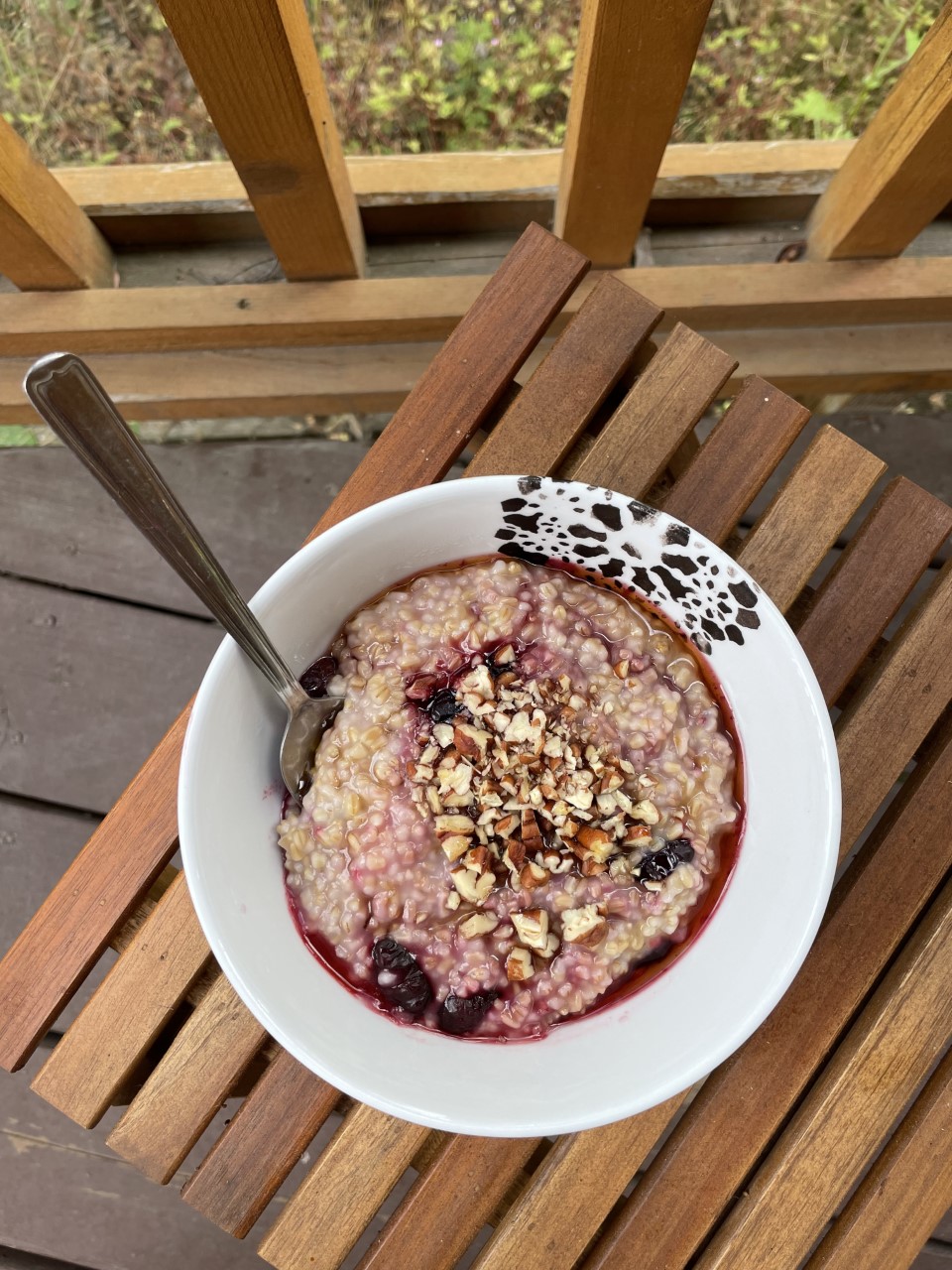
Based on the ratios provided by The Kitchn for creamy steel cut oats in the pressure cooker, I’ve made a couple of tweaks to add in your choice of frozen berries in a way that softens them up and suffuses their flavour through every inch of your bowl.
I used frozen haskap berries for this batch. If you haven’t tried haskaps, I think of them as a pleasantly tart version of a blueberry. They’re locally available here in BC (as they were in Ontario) and are purported to be significantly higher than vitamin C, potassium, and antioxidant properties compared with other common berries.
This recipe will produce 4-5 servings. Enjoy it warm today and pop the rest in your fridge for a no-fuss cold cereal tomorrow.
Ingredients
1 1/4 cups steel cut oats (traditional, not quick-cooking)
3 3/4 cups water
1 tbsp unsalted butter
Three-finger pinch salt
3/4 cup frozen berries (or more to preference)
Chopped nuts, milk, and maple syrup for serving (optional)
Process
With your Instant Pot (or other model of electric pressure cooker) on the saute function, melt the butter. Adding an oil to the pot will help reduce foam and butter, in particular, tastes great here.
Add in the oats, water and salt and lock the lid in place. Set to 10 minutes on high pressure.
Once cook time is done, allow for a 10 minute natural release until the valve has nearly dropped and the lid will easily open. Quickly add in the frozen berries, stir gently to distribute, and lock the lid in place for another five minutes to allow the berries to thaw and soften.
Serve oatmeal with desired toppings including chopped nuts (I used pecans), a drizzle of maple syrup and a splash of milk or milk substitute. Enjoy!
It’s already January 5th, which means most of us will keep up illusions about achieving our New Year’s resolutions for about five more weeks.
Every year, around the last week of December, I feel a nagging suspicion that the form and practice of annual resolutions are antithetical to achieving goals. And yet, I still appreciate taking time at the close of a year to set intentions for the new one; I just never had a better paradigm to offer up. Until now.
I’m asking myself, “What did I start in the last year that’s worth recommitting to? What do I want to continue nurturing in 2022?”
The answer for me is a consistent morning routine. In its ideal form, this has involved three components: a brief meditation (I’m a Headspace devotee), one page of journaling and movement of some kind, whether that’s yoga, a HIIT style workout or a run (read: slow jog). This may sound like a lot, but I spend only 5-10 minutes on each of those first two activities and enjoy my first coffee of the day alongside them.
Taken together, however briefly, these three practices help me head into the day knowing that no matter the number of meetings I have or how many small fires emerge before noon, I will end the workday having carved out some time that is purely for me – because I’ve already done so by the time I reach my desk. These practices help me build up the skill of stepping out of my head no matter what’s on my plate, a very useful ability when a deadline or, you know… maybe a pandemic, is nudging me toward anxiety.
These are practices I started and dropped and started again a few times during 2021. When I decided I really needed to stack them all together and commit to building a daily habit each morning, I focused on completing all three for 30 days. Here’s what happened: the meditation and journaling stuck well past the 30-day mark, but the trajectory of daily exercise was rockier. I got too excited about new kinds of workouts. (I realized – for the first time ever – that running could be enjoyable rather than a slog if you pace yourself properly. Who knew?) Coming out of a lengthy period of working from home, I bolted out of the gates and didn’t give myself enough recovery time. What may have worked in prior years when I could take a baseline of physical activity for granted did not work in 2021. I made it about 20 days before I ended up with a painfully inflamed knee and had to put on the brakes.
While I recovered from that mild injury, I kept up the other pieces of my routine. My longest meditation streak hit 64 days. I was proud of that. But if this project to sustain all three morning practices had been my New Year’s resolution, my initial go at it would undoubtedly count as a failure. From the perspective of more iterative goal setting; however, I’ve now got a great history of trial and error to start from as I press on. Nurturing this practice of a morning routine means embracing what I’ve learned and choosing to see past failure as a step along the process.
When I look back at my three decades of existence, I know I tend to keep a lot of things in the hopper (often too many). If I feel like I’ve failed in one area, I’ll simply pivot to another rather than take the time to learn hard lessons and practice (I know… I’m working on it!). By focusing on nurturing existing practices in my life, rather than jumping ship in pursuit of something new, I can’t let myself off the hook so easily.
Regardless of the task at hand, a focus on nurturing – as an ongoing, iterative process – rather than an all-or-nothing resolution, supports sustainable habit development in a few crucial ways.
1) It focuses on process over outcome
Resolutions often speak to results without having much to say about how to support that change or new behaviour. Rather than resolving to cut out alcohol for the month of January, what would happen if you decided to nurture your love of tea or your nascent interest in zero-proof cocktails? Would that shift toward a deepening or growth of existing interest make the prospect feel less punitive?
2) It gives you room to modify and adjust
Whether you spend your days nurturing perennials in your garden or caring for your kids, don’t they have different needs during different phases of development? Focusing on the process of change and growth allows for tweaks along the way.
Now that I’ve been forced into another work from home period, I’m shifting my workouts to the late afternoon as I wrap up my workday. This shift allows me to maintain my morning routine, albeit in a slightly adapted form, while reaping the benefits of intentional movement after sitting at my desk for eight hours. Experimenting with factors that help these habits thrive in changing contexts is part and parcel of continuing to nurture them.
3) You’re starting from a place of knowledge and possibly past failures
Let’s face it, in an ongoing global pandemic, does anyone have the energy to pick up something entirely new? By focusing on something that already exists in your life and seeking to nurture it, you can work with data you already have access to. What parts of this practice make you feel excited and motivated? How does it impact those around you for the better? What was going on during periods when you let your practice drop? Sometimes, all it takes to shift our actions is a little reflection about why we’re not already doing the thing we’d like to be doing.
Are you working to nurture an existing habit in 2022? Is so, I wish you creativity to play around with your process and find what works, self-compassion to circle back to something that may have been unsuccessful at first, and clarity to see the value in your commitment. Anything that’s worthwhile deserves more than a pass / fail approach. Scrap the resolutions and start nurturing what matters most.
While this wasn’t the best year for my food blogging, it was definitely a great year for eating (being home *all the time* makes it a heck of a lot easier to cook every day doesn’t it). See below the tasty things I want to remember, replicate, and enjoy again in 2021.
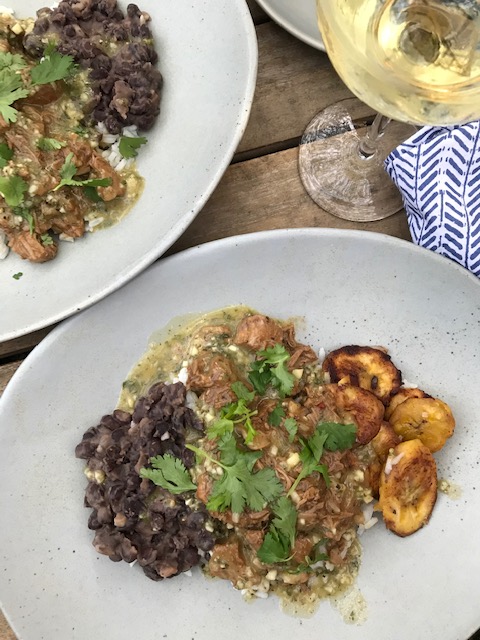
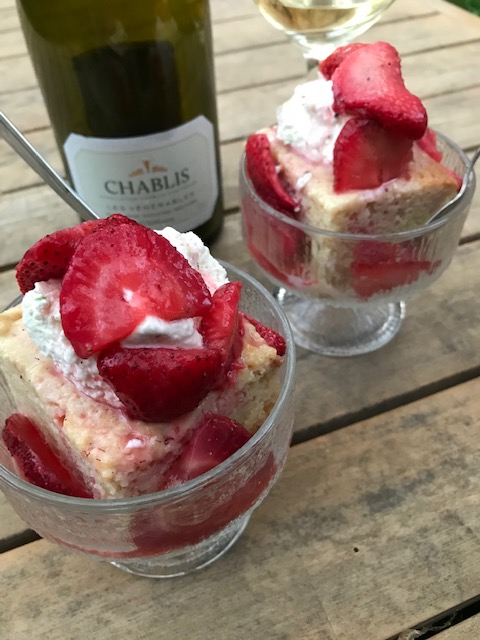
1. An at-home feast created by Chef Luke As a result of the pandemic, the hyper creative and oh-so funky Luke Hayes transformed his supper club creations into weekly menus that could be ordered for pick up and delivery. The first menu I tried—as a 30th birthday treat—was his three course Latin American inspired menu. It started with cheesy pupusas; moved along to pork, rice, and plantain with mojo sauce; and ended with rich and citrusy tres leches cake. If you’re in the Toronto area, I highly recommend signing up for his newsletter for weekly updates about what he’s cooking.
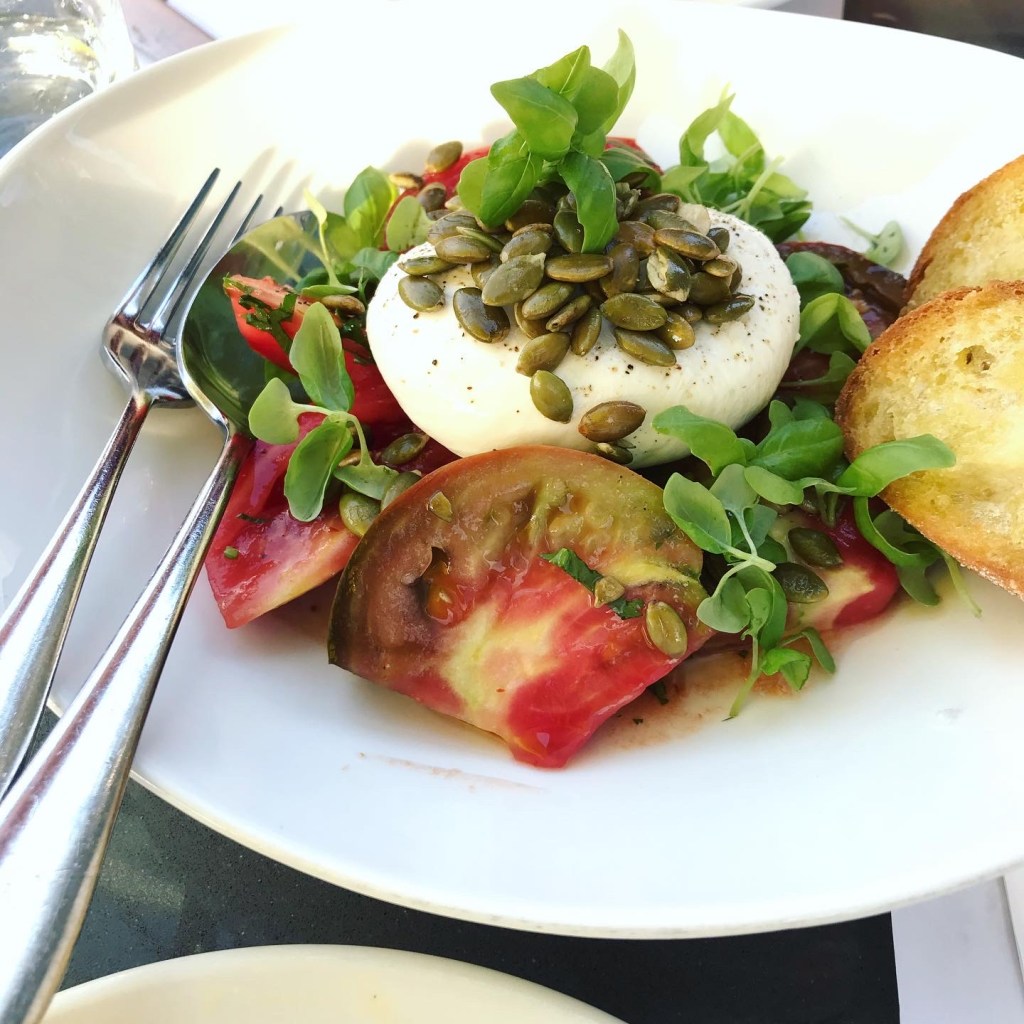
2. From a patio straight to Rome: an evening out at Ascari Enoteca When I planned this night out, I was hoping to have something to celebrate. In the end, I was runner-up for a job I was hoping to snag after a series of interviews and assignments the week prior; sometimes it has to be enough just to celebrate your progress. Jamie and I ate, drank, laughed, made a toast to all my hard work in the job hunt and had the absolute best burrata of our lives—the ultimate use of summer-fresh tomatoes.
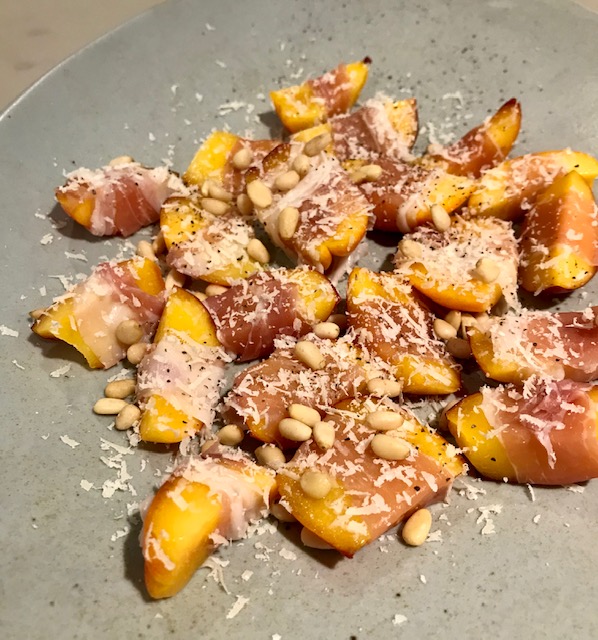
3. This breeze of an appetizer I didn’t do a lot of recipe creation this year. As of March, I was suddenly cooking for more than just myself, so I stuck to tried and true meals as well as new recipes from a range of sources. The major exception were quick snacks that came together without any cooking required, like this quick, yet a little fancy, peach and prosciutto plate. Simply take juicy, in-season peaches, wrap them in thinly sliced prosciutto, and garnish with toasted pine nuts and a generous amount of freshly grated parmesan. If you’re still looking for NYE nibbles, give this one a try.
4. The hybrid dessert of my dreams Before moving to Leslieville, I spent four years a little further north in East York, where you can’t help but fall in love with all the Greek bakeries. While I am particularly fond of Select Bakery just around the corner from my former apartment, a recent trip to Serano Bakery finally made me realize why it’s the go-to place to pick up loukoumades for a neighbourhood potluck or a scoop of gelato on a humid afternoon. Just before Halloween, I came home with a slice of baklava cheesecake. It’s literally baklava on top of cheesecake. A simple, yet perfect formula not to be tampered with. Head over to Pape Ave. if it makes its way into your dreams too.
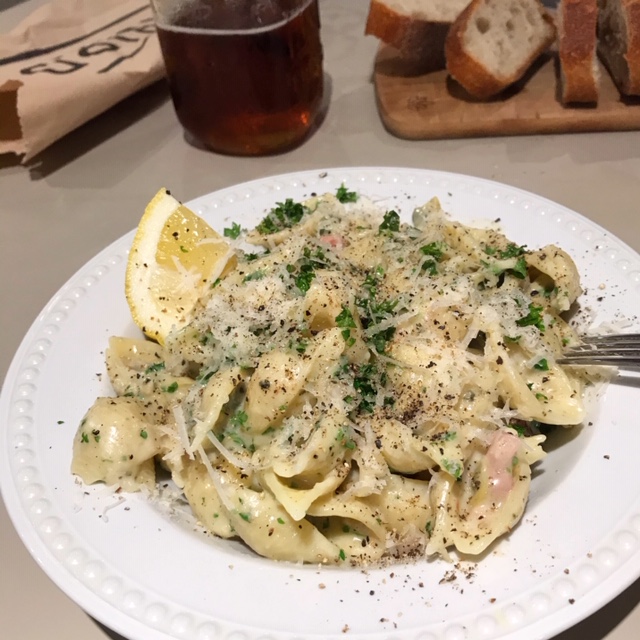
5. A decadent pasta from the pantry This was nominated by Jamie as a standout dinner from 2020. Using a basic cream sauce as a foundation—similar to the one in my Creamy Lemon-Tarragon Pasta—I added canned clams for something different. To be honest, we didn’t know what else to do with those canned clams… we assumed they were whole, but they were actually chopped. With a generous helping of lemon, parmesan, fresh pepper, and parsley, that humble pantry item yielded some pasta alchemy. This dish will definitely go into heavy rotation in 2021.
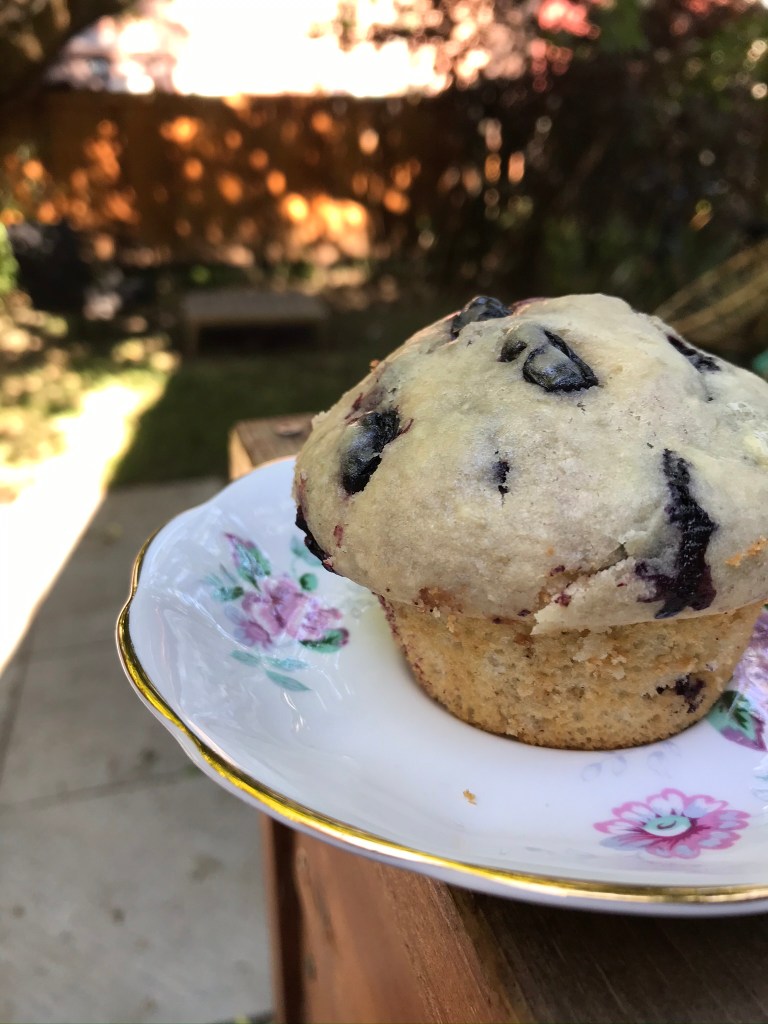
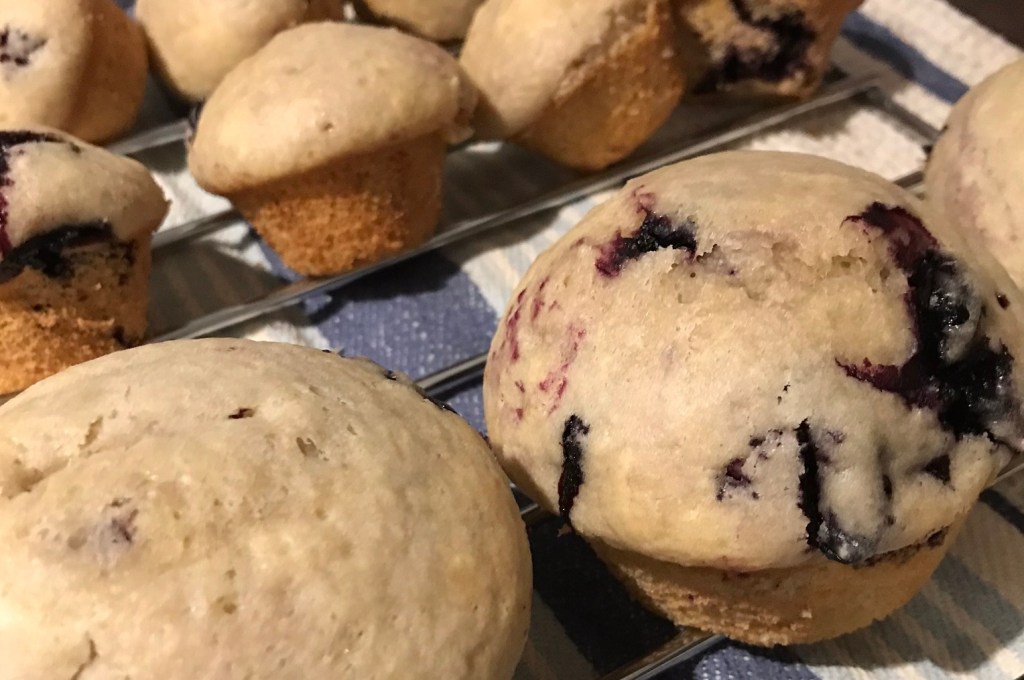
Aren’t some of the best food creations the result of happy accidents? Only after I began making muffins did I realize I was low on milk. Pulling a can of coconut milk out of the cupboard, and susbtituting half of the regular whole milk for the coconut milk lent an extra boost of healthy fats that makes these muffins shockingly tender.
Even though farmers markets had a slow start this year due to COVID-19, I was able to get my hands on some local haskap berries that had been frozen before the first market in June. If haskap (sometimes called honey berries) aren’t native to your area, feel free to subsitute any fresh summer berry of your choosing.
Ingredients:
2 cups flour
1/2 cup raw sugar
2 tbls baking powder
1/4 tsp salt
1/2 tsp vanilla extract
2 eggs
1/2 cup whole milk
1/4 cup sunflower oil
1/2 cup canned, full-fat, coconut milk
1/2 cup haskap berries, fresh or frozen
Process:
Preheat oven to 375 degrees F.
In a large bowl, mix together the flour, baking powder, sugar, and salt. Create a small well in the centre of the flour mixture.
In a separate bowl, combine eggs, regular milk, coconut milk, vanilla, and oil. Pour wet ingredients into the dent in the middle of the dry ingredients and mix with a fork until mostly combined.
Toss in the berries and gently mix once more to distribute them evenly.
Drop batter evenly into 12 well-greased muffin tins (I use a bit of sunflower oil for that) and cook for approx. 20 minutes, until edges begin browning a toothpick or chopstick inserted into the centre of a muffin pulls out clean.
Let stand for ten minutes until slightly cool and enjoy!
I used to have outsize ambitions about what to prepare when heading over to a friend’s place for a meal or celebration. There were cupcakes that would inevitably arrive with flat frosting or salads that felt a little limp upon arrival. The heartiest of dishes might arrive unperturbed, but my arms would be tired after 30 minutes of keeping the platter flat in transit.
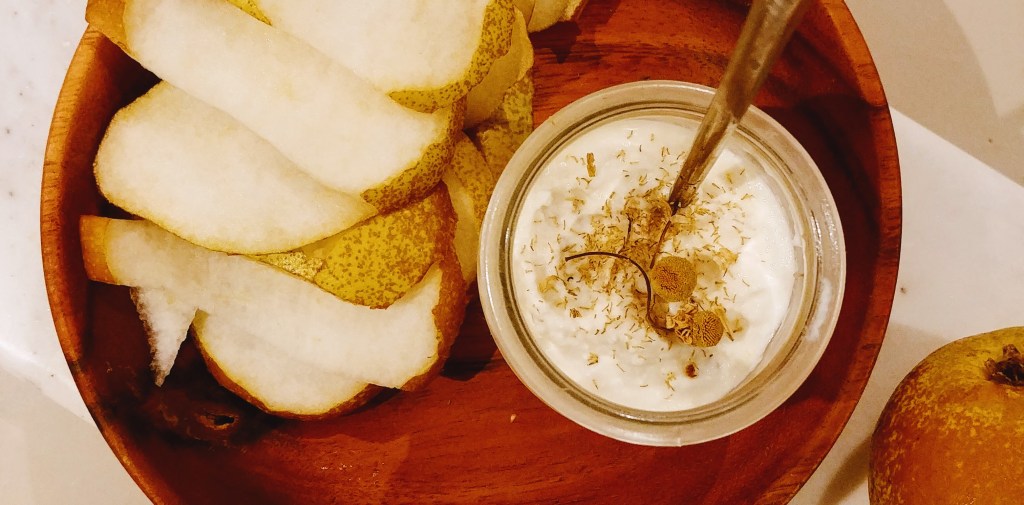
Enter dips. The easiest, most readily transportable offering. This simple ricotta dip funcions as both an appetizer or a light dessert. While there’s likely to be a crudité platter on the table, you’ll probably hold down the category for things-in-which-to-dip-fruit. And while it’s elegant enough for a special celebration, it’s quick enough to throw together for any movie night or casual potluck. I threw together the batch pictured here to ring in 2020 with some dear friends – I’m sure I’ll be toting some more out the door before the year is out.
Ingredients:
2 tbsp honey
1 454g package ricotta
Zest and juice of 1 lemon
1/8 teaspoon real vanilla extract
Pinch salt
Fresh fruit or crackers for serving.
Process:
Place ricotta in a larg bowl followed by remaining ingredients. Mix well with a fork until fully incorporated. Alternatively, pulse mixture with an immersion blender.
Keep in the fridge until ready to serve (or transport alongside an ice pack). Plate with fresh fruit, cookies, or crackers. Garnish as desired. I sprinkled a few chamomile flowers over top, but fresh herbs like thyme would also do nicely.










 with abundance